Showing posts with label boating. Show all posts

Friday, February 8, 2013

If hypothermia leaves you cold, then read this....


If you're like me, and I know I am, I shudder at the thought of freezing to death.

Bad pun aside, the human body operates best when its internal temperature ranges between 98 and 100-degrees F. The body starts to lose function when its internal temperature falls below 96-degrees F. Hypothermia is a bitch.

News of the blizzard expected to hit the northeast U.S. this afternoon brought hypothermia warnings to the fore. Hypothermia is easily avoided for most. Avoid the cold. Dress warmly in layers. Pay your heating bill. Be alert for signs of hypothermia.

Wikipedia -- you can always trust Wikipedia -- lists mild, moderate and severe hypothermia symptoms. At its mildest, hypothermia can cause involuntary shivers and mental confusion. At worst, hypothermia causes loss of muscle coordination, decreases in heart and breathing rate, blood pressure and can cause hypoglycemia.

The Power Squadrons is a boating civic & safety group. We are concerned with captains and crew who fall from the boat into cold water. This 2007 story at The Ensign is a dandy piece on hypothermia safety for boaters. It includes a chart that show survival times based on water temperature. If you fall into 32.5-degree water, you've got 15 to 45 minutes to get the heck out.

A second chart lists survival rates in 50-degree water with and without flotation devices. A life vest keeps you warmer as well as afloat. That's why the Coast Guard has become a doggone pest about wearing one all the time.

By the way, boaters, alcohol won't keep you warm in cold water. Instead, it speeds up hypothermia's effect. Save the drinkin' for the dock party.

Hypothermia is best avoided. If you must run the risk on land or on the water, be ready.

Image found on kayakquixotica.com, which also pointed me to this 10-minute NASBLA video on surviving hypothermia in the water.


NEWS:
Coroner: Woman suffers hypothermia, drowns after swimming in 45-degree water.


Thursday, April 19, 2012

History of Potomac River Squadron now online

Founder’s Day 2012
View more PowerPoint from Potomac River Power Squadron

This is a brief history of Potomac River Power Squadron, a unit of United States Power Squadrons, that I presented at the squadron's 97th Founder's Day & Change of Watch Ceremony.

Potomac River's history is United States Power Squadrons' history. Potomac River is the oldest Power Squadron in continuous operation. Potomac River's early leaders, especially Dr. A.B. Bennett, SN, were significant early leaders of the Power Squadrons movement. (By the way, Power Squadrons" is always expressed as a plural.)

Slideshare.net hosts the presentation. It's on the free account so there is advertising and clutter if you go directly to Slideshare.

If you are like me and I know I am, you enjoy histories. If so, check out the links to these well-written histories:

Northern Virginia Sail and Power Squadron,

Corinthian Yacht Club (Washington, D.C.) A Historical Review.

Northern Virginia is a descendant of Potomac River Squadron, which was itself formed by members of the Corinthian and Capital Yacht Clubs.

Enjoy.

Sunday, April 1, 2012

Chesapeake Bay Magazine features story on the Anacostia River, birthplace of the Potomac River Power Squadron.


When was the last time the Anacostia River got any good press?

I'm a native Washingtonian and I can't recall any. Even the positive story in Chesapeake Bay Magazine, that I am about to refer to you, goes by the headline The Bad and the Beautiful. The subhead tells the full story, however. "Washington's hard-luck Anacostia River may be the city's ace in the hole." (February 2012 issue, pp 22- 27, continued on pp 48-49)

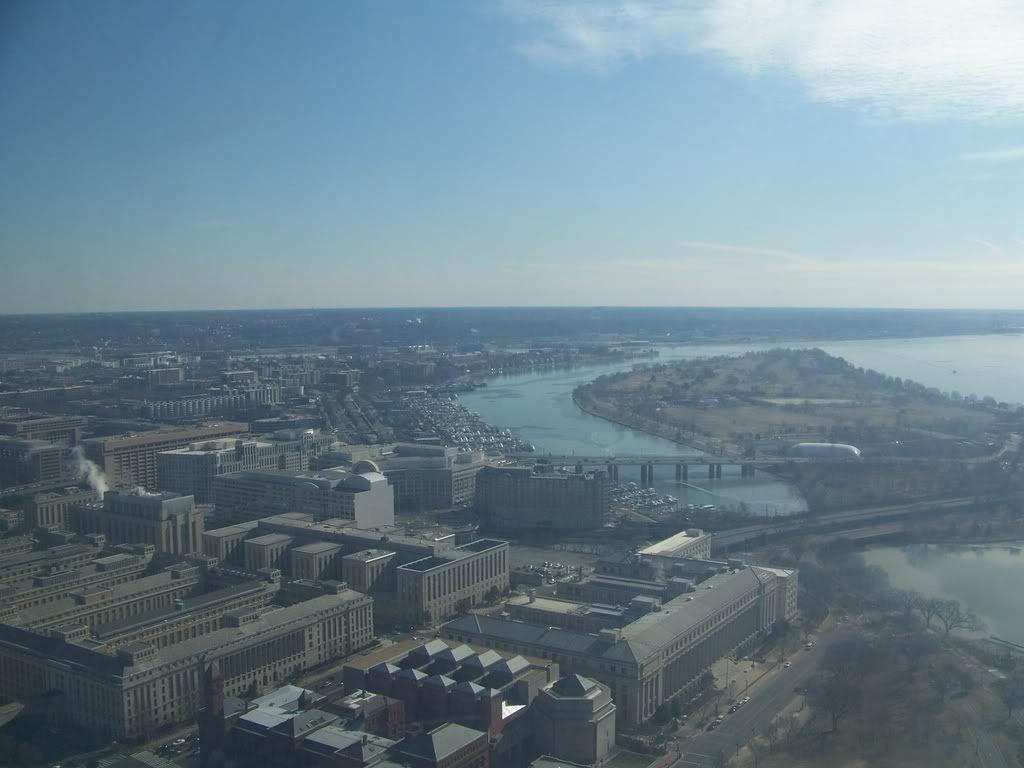
The Anacostia is still muddy, still polluted, still infested with litter and I wouldn't eat anything caught in those waters, but the river is about to get the mother of all face lifts along with the nearby Washington Channel.

The projects are already underway, kicked off by the District of Columbia's heavy and much fought-over investment National's Park, the baseball stadium.

The magazine story touches on that, goes into the District's Southwest waterfront project for the nearby Washington channel and has waxes eloquent about features about the river of interest to small craft boaters. Yes, Anacostia still features wildlife areas. The Kenilworth Gardens, contains the sole remaining marsh that was the dominant feature of the area when George Washington picked the place as the nation's capital.

The area is important to the Potomac River Power Squadron. It was born there in 1915 when Dr. A.B. Bennett, then cruise captain of the Corinthian Yacht Club, convinced members of his club and the nearby Capital Yacht Club to join the power squadron movement.

The Corinthian was based on St. James Creek on the Anacostia. The have since moved downriver, but Capital Yacht Club remains on the Washington Channel. News accounts of the day reported squadron on-water activity from the channel to Occoquan Bay.

Potomac River Squadron is one of many sponsors of the Anacostia River Cleanup Day held annually on Arbor Day. Past Commander Howard Gasaway, Sr., P, is the spark plug behind both the squadron's participation and the clean-up day itself.

Read the feature story on the magazine's web site, www.cheasapeakeboating.net. Click here.

Long articles are hard on eyes, especially old ones, when read online. So look for the February 2012 edition of Chesapeake Bay Magazine, if you can find it.

For a brief history of Potomac River Power Squadron, check out the Founders Day presentation posted on SlideShare here.

Other Anacostia links:


Anacostia Watershed Society web site - http://www.anacostiaws.org/

State of Maryland Department of Natural Resources - The Anacostia: River of Recovery


Thursday, October 13, 2011

New Century Demands New Solutions for the Marine Industry and the Power Squadrons

Tradeonlytoday.com published an opinion piece, Boat rentals are a viable option to boat ownership. Trade Only Today covers the marine industry and the story was interesting for the story it tells of the plunge in new boat sales since 1988.

Here are excerpts you need to read:

"Although the world, and especially commerce, has undergone a wholesale transformation since 1988, how the recreational boating industry markets its products remains little changed and the engine that drives the entire industry — new-boat sales — has dropped into a black hole. From 1988 to 2010 annual sales of new outboards have plummeted from 355,000 to 112,000, inboards from 20,900 to 7,300, sterndrives from 148,000 to 18,700 and sailboats from 14,500 to 4,300.

"Although all sorts of studies have been commissioned in recent years by and for the marine industry, common sense tells me three things: First, new boats have become just too expensive to be sold at the rate they once were; second, it’s increasingly hard to justify putting a boatload of money into a fixed asset that sits at a dock and may only be used a few times a month; and third, folks just don’t have the time to devote to one recreation anymore, especially if their children would rather spend their time on Facebook than fishing or facing into the wind offshore.

"It’s an article of faith in our industry that boating can’t be compared with other industries. That said, a look at other industries is instructive. Before the Great Recession as much as 25 percent of all new cars were leased, with the luxury BMW brand at the top of the list, leasing 85.7 percent of its 7 Series automobiles. To strengthen its share of this market, BMW earlier this year launched a $100 million fund — BMW i Ventures — to invest in companies that will, among other things, develop alternatives to traditional car ownership."

Michael Sciulla, vice president of the Marine Marketers of America, wrote the opinion piece. He gently scores his industry for its sense of uniqueness that inhibits open-mindedness to new business solutions. That is only human nature. Every industry says "we're different" and are blind to successful new concepts developed by other businesses to solve similar problems.

The economy that sustained marine industry growth in the 1970s and '80s is never coming back, says Sciulla (Tell me about it!). The auto, travel and vacation property industry found ways to cope by parsing ownership into slices of use for a fraction of the cost. Full ownership of luxury items are a barrier to next gen customer whose lifestyle leads them away from the hobby.

New boat sales sputter as the engine of the industry. Rentals, boat clubs, fractional shares, syndication are solutions. Groupon and Living Social are new marketing channels. Sciulla wants the industry to wake up to this before it sinks.

Read the full opinion piece here.

Charting a new course for boat membership groups

The Power Squadrons faces similar issues. Membership waxes and wanes with the industry. But, the nation's oldest non-profit boating safety, education and social membership group may be slow to adapt to next gen members. Power Squadrons membership at fewer than 45,000 pales in comparison to BoatUS with over 500,000 members. (By the way, the correct term is always "Power Squadrons" plural.)

The United States Power Squadrons™ and BoatUS are allied organizations. Every active boating Power Squadrons member I know is also a member of BoatUS. BoatUS is an association not unlike AAA. Like AAA, most boaters join BoatUS for the towing service, the on water equivalent of road service. The touch point of BoatUS members to the association is a PC screen, or these days one of those handheld thingies.

The Power Squadrons is a face-to-face membership group, with face-to-face being both and attractant and an inhibitor. I look at power Squadron members and see that we are all (ahem) "seasoned," at or near the end of our employment life. Squadron and national leaders have a vague sense that we may be missing the next generation members because their lifestyle allows less time for meetings. BoatUS may be on to something with that.

The Power Squadrons is adapting, if slowly. The Governing Board approved selling its excellent education texts direct. Boating courses and memberships are offered online. It has simplified its membership tiers and the confusing dues structure that came with it.

But the Power Squadrons is still all volunteer all the time. That lowers cost, but restricts some of its capabilities. A visit to the national and local web pages illustrate the point. They are functional, but are not as slick as BoatUS, AAA or your college alumni association web pages.

The Power Squadrons has a private area on the SailAngle social media site to facilitate internal communication—that current members resist using (Get over it, people!). There is no national United States Power Squadrons outreach on SailAngle or Facebook to reach 21st Century boaters, the only way to reach and maintain an ongoing relationship with that demographic.

The Power Squadrons excels at keeping hands-on navigation skills alive for recreational captains at a fraction of the cost of commercial schools. That is a family jewel and must remain so. (A person who completes all of the Power Squadrons' core courses can navigate anywhere in the world with the proper charts and a sextant.) On most other things, we could use a few new ideas to expand our reach beyond face-to-face. Before we sink.

Wednesday, October 5, 2011

Daniel Snyder Buys A Boat


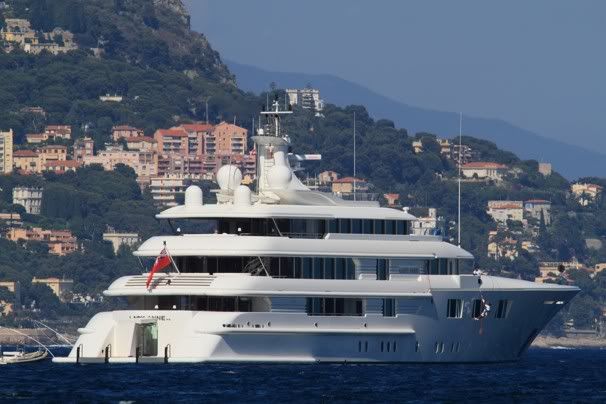
Jeesh! Billionaire Washington Redskins owner Daniel Snyder buys a 224-foot boat and the Redskins community has conniptions. You'd think he was financing the purchase from Redskins ticket sales or taking money out of our pockets. (Um, let me think about that.)

Chris Chase's story Dan Snyder paid around $70 million for a 224-ft yacht appeared today in Yahoo! Sports.

After the obligatory Snyder-bash opening relating the price to the Redskins payroll, the story goes on ~

"The Washington Post's Reliable Source reports that Snyder's recent purchase, the Lady Anne, is one of the 100 biggest yachts in the world. Snyder bought the yacht with a group of investors for around the same price that he'll spend on two-thirds of his Redskins payroll for the year."

I 'm not immune to criticizing Snyder when he deserves it, which has been often. But why unload on him for buying something he can well afford? Especially when the cheapest way to own a boat is to use it as a business. An owner could be losing up to half-million dollars of tax benefits by not using their boat as a business asset says the folks at the Bay Yacht Agency.

Rental boat clubs offer memberships that gains use, but not ownership, of a variety of recreational boats. Captains are spared the time and labor of boat maintenance--the biggest advantage in my mind. Clubs and fractional shares of vessels is the topic of a Q&A discussion on a BoatUS forum found here.

Snyder's vessel named Lady Anne was berthed in the Mediterranean was used for charter and lease services. The story did not say if Snyder planned to move the boat to U.S. waters, but if you see Lady Anne in the Bay, stand up and sing Hail To The Redskins.

To read the full story, click here.


What should you do when you buy a new boat? Why, take a Power Squadron safety course, of course.

Nice boat, Dan. See you at the dock party.

Saturday, September 24, 2011


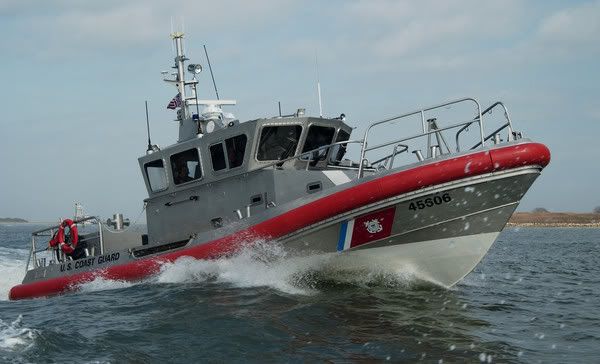
"The Coast Guard Station Annapolis, in Bay Ridge, earlier this year took delivery of a new Response Boat to allow it to better patrol Greater Annapolis waters and the Chesapeake Bay.

"Since the attacks of Sept. 11, 2001, improving the safety of major waterways and large ports has been a priority of the Department of Homeland Security. And the bay leads directly into the Port of Baltimore.

"The new $2 million, 41-foot boat will improve the Coast Guard’s performance and ability to respond to incidents. The new boat has significantly faster speeds—maximum of 42.5 knots—and a longer range at about 250 nautical miles, according to a release."

This story from the Greater Annapolis PATCH in September 2011.

Every Sailor Needs a Pair of Balls!

As a power boater, that's what I've always thought about sailors. Then, Ken Hesterberg, commodore of the Chesapeake Cruisers Association sent me the link to the video shown below. The video answers the question at the top of all of our minds:

How does a sailboat with an 80-ft. mast pass under a 65-ft. bridge? It takes big balls, of course.


You won't find this technique in your edition of Chapman Piloting or in the Power Squadron's Sail course.

What is more amazing is that this captain single-handed the maneuver.

"I can do that, but I don't wanna." ~Bart Simpson

I took the summer off to do summer stuff, but will update the site over the next few days with posts I've been saving up. Have fun and be safe on the water. On land, too.

Friday, May 20, 2011

Don't Go Into The Water


All the news focuses attention to the Mississippi River flood and the unfortunate circumstance of the people there. We have our own problems with the waters around D.C.

Flooding Potomac presents hazards for area boaters according to an online story by WTOP.

Heavy rains in the area has the Potomac River cresting its banks and creating navigational hazards for all boaters. The D.C. Harbor Police advises all boaters to stay off the Potomac through the weekend (20-22 May 2011).

A similar story on www.nbcwashington.com says the worst of the flooding is probably over, but advises boaters to stay off the Potomac this weekend. That story gave high tide (11:15 AM and 11:56 PM at Key Bridge) on Friday, 20 May, as a time for special caution for boaters and anyone along the waterfront.

The National Weather Service issued a Flood Warning for the Potomac River at Point Of Rocks affecting Frederick (MD) and Loudoun (VA) Counties and at Little Falls affecting Montgomery (MD) and Fairfax (VA) Counties. The warning is in effect until this evening. The warning was issued at 4:24 PM today.

A warning means that flooding is actually occurring. Take extreme caution when driving through flood areas. A vehicle can be swept away in as little as two feet of flowing water. Cars are not boats!

If you have first-hand knowledge of conditions along our waterways, leave a comment.

This story originally posted to the private Potomac River Power Squadron group page on SailAngle.com.

Photo Credit: natasialester 16 found on Photobucket.com

Wednesday, October 6, 2010

I Must Go Down To The Sea, But Not With The Ship

"I must go down to the seas again, to the lonely sea and the sky,
And all I ask is a tall ship and a star to steer her by...,"

Ah, the sea. Is there a mariner anywhere who can resist its alluring call? Isn't it a joy to just pick up and go?

Those of us who can, boat. Those who cannot, cruise.

I've never done a cruise ship. If I want to stay in a hotel, I prefer it to be on land. When I want to go to sea, I want the motion of the ocean and the spray on my face. I want to feel like I'm on a boat. Do you feel the same?

We should change our snooty attitude.

An August 2008 story in the Daily Telegraph (UK) reports that the P&O cruise ship Pacific Sun was caught in a violent storm 400 miles off New Zealand. According to the story:

"Some passengers told how they were flung across the ship, along with crockery and 'anything not nailed down,' when the ship tried to turn to face its bow into the storm.

"They said huge waves caught it side-on as it manoeuvred, causing the ship to pitch violently."

It's a networked world. So naturally, the event was caught on video.


Now, that's an adventure.

The Pacific Sun is a 47,000 ton vessel. She is described in Wikipedia as a medium-sized ship accommodating up to 1,900 passengers.

I've forgotten what I remember about bad weather cruising. I do remember to slow down when conditions worsen. If you can't make safe harbor, turn the bow into the weather and ride it out. (You should have checked the chart before leaving port for safe gunkholes just for this purpose.) It's a good idea to get those life vests on.

Time to dig out those old Power Squadron books, or the Chapman, at least.

Did you know that Charles F. Chapman, the original author of Chapman Piloting and Seamanship was a founding member of United States Power Squadrons?

Did you know that Chapman wrote the book in 1916 at the instigation of the assistant secretary of the Navy, Franklin D. Roosevelt, as a training manual for Navy Reservists?

That would be the same FDR who encouraged Roger B. Upton to take his boating safety movement "national." That movement morphed into United States Power Squadrons.

Did you know that Chapman has a 12 page description of United States Power Squadrons and Canadian Power Squadrons? And that those groups are described before the U.S. Coast Guard?

So which group is more important? Unless that blue light is flashing, I mean?

ZT6ADABF9B63
_________________________

John Masefield's I Must Go Down To The Sea is an anthem for boaters, sailors and mariners everywhere. Here's the full work:

I must go down to the seas again, to the lonely sea and the sky,
And all I ask is a tall ship and a star to steer her by,
And the wheel's kick and the wind's song and the white sail's shaking,
And a grey mist on the sea's face and a grey dawn breaking.

I must go down to the seas again, for the call of the running tide
Is a wild call and a clear call that may not be denied;
And all I ask is a windy day with the white clouds flying,
And the flung spray and the blown spume, and the sea-gulls crying.

I must go down to the seas again, to the vagrant gypsy life,
To the gull's way and the whale's way where the wind's like a whetted knife;
And all I ask is a merry yarn from a laughing fellow-rover,
And quiet sleep and a sweet dream when the long trick's over.

Friday, September 3, 2010

Science Finds What Boaters Already Know: Drinking Is Good

You can never be too rich or too thin, but you can drink too little for your own good. Boaters know that instinctively. Why else would you boat except for the dock party? And what's a dock party without spirits and beer?

Now comes scientific evidence in an article in the journal Alcoholism: Clinical and Experimental Research. A study shows that moderate drinkers live longer than non-drinkers.

The study confirmed the finding that alcohol consumption is heart-healthy and even helps destroy pancreatic cancer cells. The new news is that non-drinkers have higher mortality rates.

Researchers said that the non-drinkers tend to be from lower socioeconomic classes where life stresses are higher. They say lower income inhibits alcohol consumption because of the costs involved. Hmmm, that sounds like the rationale for why more people aren't boaters. Come to think of it, low income and high stress is a formula for high mortality with or without alcohol. I think those researchers were drinking when they came up with that conclusion, so don't drink the Kool-Ade on this one.

Boaters are generous with the spirits. However, I've never seen my Power Squadron friends drink while boating. We save all that for the dock parties. Age could be a factor. Most of my Power Squadron cohorts graduated high school in 19-none-ya-business.

Captains know, or should know, that alcohol has an accelerated effect on the senses when you are on the water. There's something about the glare of the sun reflected off the water, engine vibration, motion of the ocean (bay, river, lake) and the dehydrating effect of it all.

Plus drinking while boating makes you look stupid when you try to dock--and when those people with the flashing blue lights want to talk to you. They have no sense of humor about BUI. So just don't.

I'll drink to that.


Photo credit: www.free-extras.com


Wednesday, August 25, 2010

Special Factors Make For Good Business for West Marine, Brunswick


Hmmm. Perhaps the boating market isn't in thin waters any more. Two industry players report smooth sailing in the second quarter 2010.

West Marine reported on July 30, 2010, a second quarter revenue gain of 11.5 percent. Earnings per share for the second quarter was $1.52 compared to $1.46 for the same period last year.

CEO Geoff Eisenberg said the company benefited by last year's closure of competitor Boaters World and by good boating weather in the northeast.

Full story at MercuryNews.com.

It pays to be global for Brunswick Corporation who reported on July 29, 2010, a second quarter revenue gain of 41 percent to $1.015 billion. Net earnings for the quarter was $13.7 million, or $0.15 per share, compared to a loss of $163.7 million, or -$1.83 per share, in the same period last year.

Brunswick is the nation's largest manufacturer of recreational boats under about a dozen brands including SeaRay, Hatteras and Bayliner as well as Mercury and Mariner boat engines.

In it's conference call with investors, Brunswick pointed to continued industry weakness in fiberglass inboard and outboard boat sales. US Inboard demand was down 29 percent in the second quarter, following a 23 percent decline in first quarter 2010 and a 33 percent fall in the fourth quarter 2009. US demand for outboards fell 16 percent in the second quarter, following declines of 22 percent in the first quarter and 29 percent in the fourth quarter 2009.

Brunswick was helped by the overseas market. Boat sales outside the US was up 64 percent for the quarter while engines sales outside the US jumped 28 percent.

Profit in the boat segment was helped by less need for discounting to push retail sales out the door. However, Brunswick reported 27 weeks of inventory in its pipeline. That can't be healthy for a seasonal business.

While the outlook for the US boat market is still grim, Brunswick can count on its bowling, billiards and exercise equipment to pick up the slack. The company's business results were a surprise to analysts and its stock is up over 200 percent from last year.

For the earnings call transcript, go to seekingalpha.com.

West Marine gains by less competition and Brunswick gains from bowling ball sales and demand in Europe. Good if you can get it, but special factors only work once. Demand has to be stronger for the industry to get healthier..

My IBM background tells me to issue some disclaimers here. So I disclaim any expertise as a stock analyst. This report is not a recommendation to buy or sell stock in these or any other company. If this were a recommendation, you should do the opposite of whatever I say. I have a proven talent for buying high and selling low because, like most laymen, I tend to hold on to stocks for too long, then won't sell until it "comes back." Which explains why I'm not running my boat these days--nor in the market for a new one.

Want stock advice? See an expert. Want to talk about the hobby? Stick around. Want to talk boating education or boating safety? Join your local Power Squadron.

Photo credit: Mercury Marine

Tuesday, August 24, 2010

The Potomac River Is...Clean

Well, cleaner and clearer that it was than when I was growing up way back in 19 none-ya-business.

Rob Hedelt's story on Fredericksburg.com tells how much better the river has become (Trip on the river reveals differences).

Hedelt accompanied two Chesapeake Bay Foundation naturalists on a 44 mile cruise up the Potomac from Aquia Creek to D.C. The naturalists were there to measure differences in water quality of the river in Stafford County, Virginia and Washington.

Water clarity is one difference, ranging from one fathom down river to about nine inches around the Wilson Bridge.

The naturalists attribute much of that to the presence of water grasses, with more of it from Mount Vernon down river, less in the waters around urbanized Washington. Sea grass filter particulates from the water and form a nursery for the tasty Blue Crabs we so love in these parts.

The effort to clean the Potomac has been lengthy and not always successful. Thought it never sunk to level of the Cuyahoga River, Washington residents were once prohibited from contact with the Potomac, much less eat the fish caught there.

These days, governments cooperate more or less on improving water quality. An army of volunteers work to clean out the trash along the Potomac watershed. One of those people is Potomac River Squadron's P/C Howard Gasaway whose involvement in the Anacostia River Clean-Up predates his membership in the Power Squadrons.

Cleaner water means better fishing. That, and the new National Harbor, will reestablish the Potomac as a premier boating destination as time goes on.

That has to be good for the Potomac River Power Squadron. We lost a lot of energy as members moved their boats to the Chesapeake and joined yacht clubs located there.

Photo Credit: (cc) richmanwisco on flickr.com

Are Your Charts Outdated, Captain?


My instructor in the Piloting class told me something astounding. I am supposed to navigate my boat using paper charts and that round thing on the dash covered by that glass bowl. What is it called? Oh yeah. The compass.

This is the Age of Technology. We don't convey messages by pen and paper. Most boaters don't pay much attention to chart books, if they even have one on-board.

For the longest time, United States Power Squadrons treated Global Positioning Systems (GPS) as back-up to nautical charts and the skills to read them. Not that they were being old fashioned. How's a recreational boat captain to know where to go if the GPS conks out?

USPS adapted to trends and boater preferences to treat GPS as the primary navigation tool, without backing away from paper charts (every boater should have the chart on board of the waters they ply).

Now the challenge is to get captains to check the accuracy of their nav tools from time to time. It turns out that is something of a problem.

A survey of boaters by the Alliance for Safe Navigation found that only one-third of respondents regularly undated their on-board navigational data.

“Unfortunately, these survey results indicate that boaters simply are not aware of how often conditions change and how those changes can affect their safety,” explains President Ron Walz of OceanGrafix, a founding member of the alliance. “The truth is that waters do change—and inaccurate chart information can turn a safe and enjoyable cruise into a dangerous situation.”

Highway surfaces do not change, except for the damned potholes. Water always change. Wind, current and tide works its magic both on the surface and the sea floor.

So yes, it really does help to swap out those old paper and electronic charts for more current ones and to glance at the Coast Guard Notice to Mariners from time to time. If you are a thorough captain who plots your course on paper before transferring it to your GPS, be sure you've set the GPS to the same datum as on the paper chart.

If you don't know what I just said, schedule yourself for a Piloting class or GPS seminar offered by your local Power Squadron.

If you don't know where you are going, you'll run aground when you get there. Put more bluntly, boating's a bitch when you are lost on the water. Don't get lost because of outdated information.

Full disclosure: United States Power Squadrons is a member of the The Alliance For Safe Navigation as is Jeppsen, Sea Tow, BoatUS, and OceanGrafix. The Power Squadrons and BoatUS would have you avoid incidents on the water. Jeppsen and OceanGrafix would like to sell you stuff that enables you to know where you are--and avoid hazards--on the water. If you have to call Sea Tow...well, you probably weren't paying enough attention to the other four.

USPS members are offered discounts on navigation products offered by Jeppsen and OceanGrafix and receive discounted membership in BoatUS.

Monday, August 23, 2010

Boating Education Saves Lives


You get into a lot when you get into a boat. Too
many recreational boat captains do not appreciate how tricky the water can be until they get into a jam. What they do then may cost them their lives, or save it.

So Many Lessons In Tragedy

Anthony Brown of Silver Spring, Maryland, commander of Potomac River Power Squadron, suspects that less experienced power boaters think of their vessel the way they think of their car. That thought occurred to him when he read Nick Schuyler's account of the tragic accident that took the lives of two NFL players as told in Schuyler's book Not Without Hope. Victims of the February 2009 Gulf of Mexico accident were pro football players Marquis Cooper and Corey Smith, and Will Bleakley, a friend of Schuyler. Cooper was the owner and skipper of the 21-foot boat.

Cooper's anchor snagged on something on the seabed. Unable to get it up, the group tied the anchor line to the stern of the boat and tried to pull the anchor free. That's a big no-no, according to Brown. The dangers of tying off the anchor to the stern of a boat is one of the early lessons students are taught in the Power Squadron's Seamanship course. In Cooper's case, the anchor did not give way. Instead, the stern was pulled under water swamping the boat. The four men were thrown overboard as the boat capsized.

Brown suspects that the group thought of the boat as a tow truck. Faced the same situation a week before the accident, Cooper did one of the smartest things a skipper can do when an anchor can't be unsnagged. He cut the line, sacrificing the anchor for the safety of the boat and passengers. Schuyler says Cooper was determined not to lose another anchor.

Boat Handling Is A Skill

Chris Pickwick, of Adelphi, Maryland, a squadron past commander and boating instructor, says the incident forcefully illustrates the need for safe boat education and how to handle unexpected boating situations even when on a simple fish
ing trip.

"The United States Power Squadrons and a number of other private and state organizations offer safe boating education. This training would have been helpful for the four football players aboard a 21 foot boat who experienced a boating accident 75 miles from shore in the middle of Winter.

"After taking such a course, these boaters would have known that four big men on a small boat might have at least made the boat unstable if not overloaded according to the boat's U.S. Coast Guard Maximum Capacities Vessel Plaque. They would also have been aware that standing on the boat’s rear deck would contribute to its instability as would surging the engine. They would also have known not to anchor from the stern as this also drags down the lowest part of the boat. These boaters would have known the proper way to free the anchor, and the need to make a float plan in case of emergency.

"Other courses offered by the Power Squadrons such as Seamanship, Piloting, Advanced Piloting, and Weather would have offered them further instruction them on how to plan a safe trip, how to handle the boat in heavy weather, the need to monitor the weather and to call for help before it was too late and the best way to manage hypothermia once in the cold water."

Schuyler is the lone survivor of the accident and the only one with a first-hand description of what happened. He is not an experienced boater, so Brown is not sure that Schuyler has the best grasp of Cooper's action. But the story itself is a cautionary tale for recreational boaters.

What's A Recreational Boat Captain To Do?

Recreational boat captains have fewer hours on the water than commercial captains or watermen. They are not required to meet commercial certification nor even have nautical charts on board. Sooner or later says Brown, every skipper must decide whether he is a boat driver or pilot.

For Brown, that was easy. He was looking for a way to reassure his non-boating, non-swimming passengers that it would be OK cruise with him. He took the Power Squadron's Safe Boating and Seamanship course before operating his boat. "I spent the equivalent an hour of class room time for every two hours of on-water time in my first year boating."

Organizations like the Coast Guard Auxiliary, community colleges and State authorities offer boating safety courses. Commercial schools go beyond that, but target their offerings to those who want a commercial captains license. The Power Squadrons may be the only group that certifies recreational boat skippers as having a body of knowledge in piloting and seamanship.

Skippers who take the Power Squadron curriculum from Seamanship, Piloting, Advanced Piloting to Navigation would be able to plot a course anywhere in the world as long as they have the proper charts, a sextant and a GPS. They would also be exposed to what can go wrong during a voyage and how to cope with it.

Know Before You Go

"All of boating is based on maritime practices and traditions" says Eugene Roberson, Mitchellville, Maryland, Potomac River's safety officer. Roberson points out that the captain of the Titanic was an experienced seaman, yet he sunk his ship. Boating is fun, but anything can happen on the water.

There's more to learn than safe boating, adds Roberson. Boating demands more self-sufficiency than does driving. The captain needs to know his mechanical and electronic systems. There's no pulling over if your boat breaks down in the middle of the Chesapeake Bay. "Boating education saves money as well as lives."


About The Power Squadrons

Potomac River Power Squadron is one of over 450 local affiliates of United States Power Squadrons, the world's oldest and largest non-profit volunteer boating organizations. Potomac River Power Squadron was founded in Washington, D.C. in 1915 and is a 501c(3) non-profit educational organization. It's members volunteer their time on boating safety and education as a civic service. Most members boat on the Chesapeake Bay or Potomac River, but live in suburban Maryland or the District of Columbia.

Potomac River is one of four squadrons active in the Washington, D.C. metropolitan area. The others are based in Rockville, Maryland, Northern Virginia and Mid-Potomac, centering on the Occoquan and Potomac Rivers.

The Power Squadrons offer a safe boating course that meets the requirements of the National Association of State Boating Law Administrators. The squadrons offer advanced classroom courses on boating. Its members volunteer to offer courtesy Vessel Safety Checks for non-commercial boats and perform other civic services around boating. United States Power Squadrons has been honored by four U.S. presidents for its boating safety and education programs.